


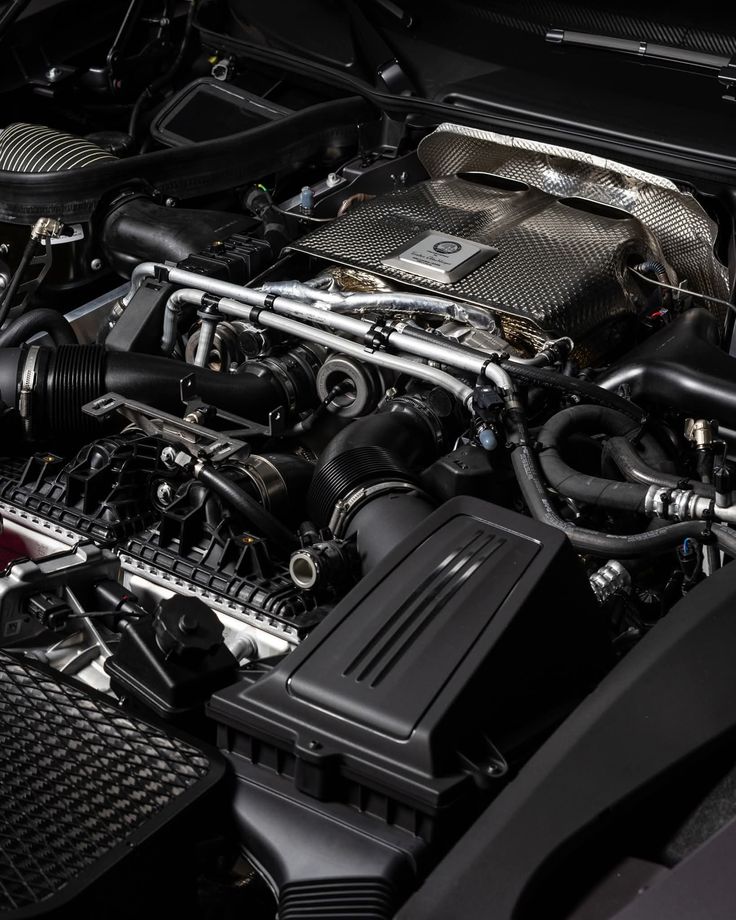
Automotive engine-area components operate in one of the most demanding environments for polymer materials. They may face elevated temperatures, vibration, mechanical loads, oil, fuel vapors, coolants, road salt, moisture, and repeated thermal cycling. At the same time, vehicle manufacturers continue to pursue lower weight, more efficient production, compact packaging, and longer service life.
Engineering plastics make it possible to replace selected metal parts, integrate multiple functions, reduce corrosion, and simplify assembly. Success depends on choosing a compound that matches the real combination of heat, stress, chemicals, and lifetime requirements—not simply selecting a resin with a high short-term temperature rating.
Why Engine Components Need Specialized Materials
The temperature printed on a technical data sheet tells only part of the story. A material may perform well in a short heat test but lose strength after thousands of hours of exposure. It may resist dry heat but degrade in hot coolant, or maintain stiffness while becoming brittle after oxidation.
Material selection for engine components should consider:
- Continuous and peak temperatures;
- Duration and frequency of thermal exposure;
- Static and cyclic mechanical loads;
- Vibration and impact;
- Contact with oil, grease, fuel, coolant, and cleaning chemicals;
- Humidity and hydrolysis;
- Dimensional tolerances and sealing requirements;
- Electrical insulation or conductivity;
- Flame-retardant requirements;
- Expected vehicle service life.
Because these conditions interact, modified compounds are often more appropriate than standard unfilled polymers.
Key Material Families for Engine-Area Applications
| Material family | Main advantages | Typical considerations |
|---|---|---|
| PA6 | Good toughness, flow, and cost efficiency | Moisture absorption and moderate heat resistance |
| PA66 | Higher stiffness and heat resistance than PA6 | Higher processing temperature and moisture sensitivity |
| Heat-stabilized PA66 GF | Strength, creep resistance, and thermal stability | Fiber orientation, weld lines, and surface finish |
| Hydrolysis-resistant nylon | Improved durability in hot water and coolant | Grade must match fluid and temperature conditions |
| PPA | High-temperature stiffness and dimensional stability | Higher material and processing cost |
| PA46 | Strong high-temperature mechanical performance | Moisture control and processing discipline |
| PA12 or long-chain nylon | Low moisture absorption and good chemical resistance | Lower high-temperature stiffness than some alternatives |
| PPS | Excellent chemical and thermal resistance | Higher cost and application-specific toughness needs |
| PEEK | Exceptional performance in extreme conditions | Premium cost and specialized processing |
1. Glass-Fiber-Reinforced PA66
Glass-fiber-reinforced PA66 is widely used for structural components near the engine because it combines high stiffness, good tensile strength, heat resistance, and favorable cost-performance. Common fiber levels include 30%, 35%, and higher, depending on load and dimensional requirements.
Potential applications include:
- Engine covers and structural housings;
- Air-intake system components;
- Brackets and supports;
- Fan and shroud components;
- Sensor bodies and electrical connectors;
- Cable-management parts;
- Mechanical actuators.
Heat-stabilized grades contain additives that slow thermal oxidation and help retain mechanical properties during long-term exposure. The stabilization system must be selected for the required temperature and service duration.
2. Reinforced PA6 for Cost-Effective Structural Parts
Glass-filled PA6 offers a useful combination of toughness, flow, strength, and cost. It can fill complex molds more easily than some higher-temperature nylons and is suitable for many components located away from the hottest zones.
PA6 may be considered for covers, ducts, brackets, housings, clips, and other parts exposed to moderate temperatures. Because PA6 absorbs moisture more readily than some alternatives, designers should account for conditioned dimensions and changes in stiffness.
Heat stabilization, impact modification, and glass reinforcement can expand the application range. Nevertheless, each grade must be validated under the actual thermal and chemical environment.
3. Hydrolysis-Resistant Compounds for Coolant Contact
Hot water and glycol-based coolant can attack the polymer chains of standard nylon over time. This process, known as hydrolysis, may reduce molecular weight, strength, and toughness even if the part initially appears undamaged.
Hydrolysis-resistant nylon compounds use resin selection, stabilizers, reinforcement, and formulation control to improve durability. They may be used in coolant-system connectors, thermostat housings, pump components, reservoirs, and fluid-handling parts when validated for the target fluid.
Testing should use the actual coolant composition, concentration, temperature, pressure, and aging duration. Small differences in fluid chemistry or operating cycles can affect performance.
4. PPA for Higher Thermal Demands
Polyphthalamide, or PPA, is a high-performance polyamide family designed for higher temperature capability and improved dimensional stability. Reinforced PPA can retain stiffness in conditions where conventional PA6 or PA66 may soften excessively.
PPA is often considered for:
- High-temperature electrical connectors;
- Thermostat and coolant components;
- Charge-air and air-management parts;
- Sensor housings;
- Actuator components;
- Precision parts requiring stable dimensions.
Different PPA chemistries offer different balances of moisture absorption, toughness, melting point, and processing behavior. The specific grade should be selected using long-term property data rather than family-level assumptions.
5. PPS and PEEK for Severe Environments
Polyphenylene sulfide (PPS) provides excellent chemical resistance, low moisture absorption, inherent flame resistance, and strong dimensional stability at elevated temperatures. Reinforced PPS can be appropriate for pumps, valves, sensors, electrical parts, and demanding fluid-handling systems.
Polyether ether ketone (PEEK) delivers exceptional thermal, chemical, wear, and fatigue performance. It is used where failure risk or operating severity justifies its premium cost. Potential applications include specialized seals, bearings, compressor components, and high-temperature electrical or mechanical parts.
These materials should not be selected solely because they offer the highest performance. An over-specified polymer can add unnecessary cost and processing complexity. The best material is the one that meets the complete requirement with an appropriate safety margin.
Essential Performance Requirements
Long-term heat aging
Engine components may spend years at elevated temperature. Materials should be assessed using retained tensile strength, elongation, impact resistance, and visual condition after representative aging—not only initial heat-deflection temperature.
Creep resistance
Brackets, bolted housings, clips, and sealing structures carry loads for long periods. Glass reinforcement and high-temperature polymers improve creep resistance, but temperature, moisture, stress concentration, and assembly force must still be considered.
Thermal cycling
Repeated heating and cooling causes expansion and contraction. When a plastic component is joined to metal, differences in thermal expansion can create stress, loosen fasteners, or affect seals. Joint geometry and material pairing should accommodate these movements.
Chemical resistance
Compatibility must be evaluated against the actual fluids used in the vehicle. Oil additives, fuel blends, coolants, degreasers, and environmental contaminants can produce very different results.
Vibration and fatigue
Continuous vibration can initiate cracks at sharp corners, weld lines, fastener bosses, and poorly supported features. Toughness, fatigue resistance, geometry, and assembly quality all influence lifetime.
Dimensional stability
Air, fluid, sensor, and electrical components may require tight dimensional control. Moisture absorption, mold shrinkage, fiber orientation, warpage, and thermal expansion must be addressed from the beginning of part and mold design.
Designing with Reinforced Nylon Compounds
Glass-filled compounds are anisotropic: their properties vary according to fiber direction. Injection molding aligns many fibers with melt flow, which affects strength, shrinkage, and warpage.
Good design practices include:
- Positioning gates to align fibers with important load paths;
- Avoiding critical weld lines in highly stressed areas;
- Using smooth radii instead of sharp corners;
- Maintaining consistent wall thickness;
- Designing screw bosses and inserts for long-term load retention;
- Allowing for differential thermal expansion;
- Validating sealing surfaces after aging and conditioning;
- Controlling resin drying and processing history.
Metal replacement projects require structural redesign rather than direct copying. Plastic ribs, curves, local reinforcement, and integrated features can carry loads efficiently while reducing part count and weight.
Validation from Material to Finished Component
A robust validation process should progress from material data to representative samples and finally to complete components. Depending on the application, testing may include:
- Tensile, flexural, and impact properties after aging;
- Creep and fatigue testing;
- Thermal cycling;
- Fluid immersion and pressure testing;
- Vibration and mechanical shock;
- Dimensional measurement after moisture conditioning;
- Burst, leakage, or sealing performance;
- Electrical and flame testing;
- Vehicle-level durability trials.
Processing validation is equally important. Excess moisture, overheated resin, short fibers, voids, poor weld lines, or uncontrolled mold temperature can prevent a well-selected material from delivering its expected performance.
A Practical Material Selection Process
- Define the component’s temperature profile, including peaks and duration.
- Identify every fluid and chemical the part may contact.
- Map static, impact, vibration, and fatigue loads.
- Establish dimensional, sealing, and assembly requirements.
- Shortlist material families using long-term data.
- Select modifications such as glass reinforcement, heat stabilization, or hydrolysis resistance.
- Review gate location, fiber orientation, weld lines, and thermal expansion.
- Mold representative prototypes under controlled conditions.
- Test aged parts in realistic environments.
- Confirm process capability before mass production.
Conclusion
Automotive engine components require materials that can withstand much more than a high temperature printed on a data sheet. Long-term heat aging, chemical exposure, hydrolysis, creep, vibration, thermal cycling, and dimensional stability must be evaluated together.
Glass-filled PA6 and PA66 provide cost-effective solutions for many structural parts. Hydrolysis-resistant nylon supports coolant-contact applications, while PPA, PA46, PPS, and PEEK address progressively more demanding conditions. By matching the compound, part design, molding process, and validation plan to the actual service environment, manufacturers can achieve lower weight, reliable performance, and long component life.