


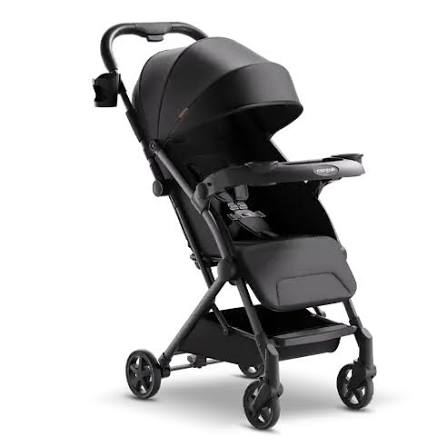
A baby stroller must perform two seemingly opposite jobs. It needs to be strong enough to carry a child safely, withstand repeated folding, absorb vibration, and handle daily use. At the same time, it should be light enough for parents to lift into a car, carry upstairs, steer through crowded spaces, and travel with comfortably.
Achieving this balance is not simply a matter of choosing the lightest available material. Stroller manufacturers combine metals, engineering plastics, textiles, foams, and elastomers so that each component delivers the right level of strength, durability, comfort, and weight. The final performance depends not only on the materials themselves but also on structural design, manufacturing quality, and safety testing.
This article explains how common baby stroller materials contribute to a strong yet lightweight product—and what manufacturers should consider when selecting them.
Why Material Selection Matters in Baby Stroller Design
Every gram matters in a stroller, but reducing weight without understanding load paths can compromise safety or durability. The frame must support the child and any permitted storage load. Hinges and locking mechanisms must survive thousands of opening and closing cycles. Wheels and suspension parts must tolerate bumps, curbs, and uneven ground. Fabrics must remain secure while providing comfort, breathability, and easy maintenance.
Material selection affects:
- Overall stroller weight;
- Structural strength and stiffness;
- Impact and fatigue resistance;
- Folding and steering performance;
- Weather and corrosion resistance;
- Child comfort and thermal management;
- Product appearance and perceived quality;
- Manufacturing cost and service life;
- Compliance with applicable safety requirements.
The best result usually comes from a multi-material design. High loads are managed by metals or reinforced polymers, while lower-load covers, housings, and comfort components use lightweight plastics, textiles, foams, and rubber-like materials.
Common Materials Used in Baby Strollers
| Stroller component | Common materials | Main design purpose |
|---|---|---|
| Main frame | Aluminum alloy, steel, magnesium alloy | Strength, stiffness, and structural support |
| Joints and hinge housings | PA6, PA66, glass-fiber-reinforced nylon, POM | Load transfer, wear resistance, and precise movement |
| Handles and accessory housings | PP, ABS, TPE, EVA foam | Low weight, grip comfort, and appearance |
| Wheels | EVA, PU, rubber, PP or PA hubs | Rolling performance, shock absorption, and durability |
| Seat and canopy | Polyester, nylon fabric, mesh | Support, breathability, weather resistance, and easy cleaning |
| Seat padding | PU foam, EVA foam, polyester fiber | Comfort and impact cushioning |
| Harness components | Polyester webbing, POM or reinforced nylon | Restraint strength and secure operation |
| Fasteners and axles | Steel, stainless steel, aluminum | Reliable joints and concentrated load support |
1. Aluminum Alloys: The Popular Lightweight Frame Choice
Aluminum alloy is one of the most common materials for premium and mid-range stroller frames. It offers a high strength-to-weight ratio, good corrosion resistance, and an attractive metallic finish. Aluminum tubes can be extruded into efficient profiles, bent into shape, and joined using rivets, screws, welding, or engineered connectors.
Advantages of aluminum stroller frames
- Lower density than steel;
- Good resistance to outdoor corrosion;
- Sufficient stiffness when tube geometry is optimized;
- Suitable for anodizing, painting, and powder coating;
- Clean appearance associated with lightweight products;
- Easier lifting and transportation for parents.
Aluminum alone does not guarantee a light or durable stroller. Tube diameter, wall thickness, alloy grade, heat treatment, joint design, and manufacturing quality all influence performance. A poorly designed thin tube may buckle or fatigue, while a properly engineered hollow profile can provide high stiffness with relatively little material.
Manufacturers often place larger-diameter aluminum tubes in areas that need bending resistance. This can increase structural stiffness without adding as much weight as a thick solid section.
2. Steel: Strength and Reliability Where Loads Are Highest
Steel is heavier than aluminum, but it remains valuable in stroller construction because of its high strength, toughness, predictable behavior, and cost efficiency. It may be used for complete frames in economical models or selectively for axles, pins, fasteners, brackets, and heavily loaded joints.
Advantages of steel components
- High strength in compact cross-sections;
- Good impact resistance and toughness;
- Excellent performance in pins, shafts, and fasteners;
- Reliable joining through welding, riveting, or mechanical assembly;
- Competitive material and manufacturing cost.
The main disadvantages are weight and susceptibility to corrosion if the surface is not properly protected. Paint, powder coating, plating, or stainless steel may be used depending on the component and expected environment.
A hybrid frame can take advantage of both metals: aluminum tubes reduce the stroller’s overall mass, while steel pins or brackets reinforce small areas exposed to concentrated forces and repeated movement.
3. Magnesium Alloys and Advanced Lightweight Metals
Magnesium alloys are lighter than aluminum and can be used in specialized frames, wheel hubs, or structural castings. They offer attractive weight-saving potential, but material cost, corrosion protection, casting control, and production requirements are more demanding.
These alloys are therefore more common in premium products where a lower carrying weight is a strong selling point. Their use must be supported by careful engineering and quality control; substituting a lighter metal without redesigning the part can create new stiffness, fatigue, or corrosion challenges.
4. Engineering Plastics in Structural Joints
Modern strollers rely on engineering plastics for far more than decorative covers. Materials such as PA6, PA66, glass-fiber-reinforced nylon, and polyoxymethylene (POM) are frequently used in folding joints, wheel mounts, brake parts, latch housings, and adjustment mechanisms.
Why engineering plastics are useful
- They are lighter than metal;
- Complex shapes can be injection molded in one operation;
- Ribs, clips, guides, and mounting points can be integrated into a single part;
- Some grades provide good fatigue and impact resistance;
- They resist corrosion and require little surface finishing;
- Part consolidation can reduce assembly time and the number of fasteners.
Glass-fiber-reinforced nylon is especially useful when greater stiffness and strength are required. The glass fibers help the polymer resist deformation and carry higher loads. However, fiber content, orientation, weld-line position, moisture absorption, and notch design must be carefully managed.
POM is often selected for sliding or rotating components because of its dimensional stability, low friction, and wear resistance. It can help folding mechanisms and adjustment parts move smoothly without requiring a heavy metal assembly.
Engineering plastics should not be selected by resin name alone. A standard unfilled nylon and a heat-stabilized, impact-modified, glass-filled nylon can behave very differently. Designers must evaluate the exact grade under realistic temperature, moisture, load, and cycling conditions.
5. Commodity Plastics for Lightweight Covers and Accessories
Polypropylene (PP) and acrylonitrile butadiene styrene (ABS) are widely used for trays, covers, wheel components, accessory brackets, and noncritical housings.
PP is lightweight, cost-effective, chemically resistant, and capable of forming living hinges in suitable designs. It is useful for parts that need flexibility or resistance to repeated minor impacts. ABS provides good surface quality, dimensional control, and rigidity, making it suitable for visible housings and decorative components.
These materials help reduce weight because complex features can be molded directly into the part. A well-designed plastic housing may replace several metal pieces, screws, and finishing operations. For safety-critical load-bearing components, however, manufacturers must verify whether a reinforced engineering polymer or metal insert is necessary.
6. Wheel Materials and Their Effect on Weight and Ride Quality
Wheels strongly influence stroller weight, steering effort, vibration, and the child’s comfort. No single wheel material is best for every type of stroller.
EVA foam wheels
EVA foam wheels are extremely light and require no air pressure. They are common on compact and travel strollers because they reduce overall weight and eliminate punctures. Their limitations include lower abrasion resistance and less cushioning on rough surfaces compared with high-quality rubber or pneumatic tires.
Polyurethane wheels
Polyurethane, or PU, can provide a useful balance of wear resistance, grip, shock absorption, and weight. PU wheels are available in different hardness levels, allowing manufacturers to tune ride comfort and rolling behavior.
Rubber and pneumatic tires
Rubber tires generally offer good grip and durability. Air-filled tires provide excellent cushioning on uneven ground but add weight, require maintenance, and can be punctured. They are more common on jogging or all-terrain strollers than on ultra-compact travel models.
Wheel hubs
Wheel hubs may use PP, reinforced nylon, aluminum, or combinations of these materials. Lightweight molded hubs can incorporate spokes, bearing seats, and decorative features in one part. Bearings, bushings, and axle interfaces must still be engineered for wear and repeated impact.
Larger wheels usually roll over obstacles more easily but add mass and storage volume. Manufacturers therefore balance material density, wheel diameter, tire construction, and intended terrain rather than optimizing any one variable in isolation.
7. Textiles: Lightweight Support, Protection, and Comfort
The stroller seat and canopy account for less structural weight than the frame, but their material performance is essential to safety and comfort. Polyester is widely used because it offers good strength, abrasion resistance, color retention, dimensional stability, and cost efficiency. Nylon fabrics may also be used when high tear and abrasion resistance are required.
Mesh panels can improve ventilation without significantly increasing weight. Coatings or laminated layers may add water resistance, stain resistance, or ultraviolet protection. Each added finish, however, should be evaluated for durability, breathability, skin contact, odor, and applicable chemical requirements.
Textile strength depends on more than fiber type. Fabric weight, weave structure, yarn quality, seam design, thread, reinforcement patches, and attachment points all affect performance. Areas around the harness, seat edge, and frame connection often require additional reinforcement because loads are concentrated there.
8. Foams and Elastomers for Comfort Without Excess Weight
Foams provide cushioning while adding relatively little mass. Polyurethane foam is commonly used in seat pads, while EVA foam may be used in handles, protective pads, and wheel components.
Thermoplastic elastomers (TPEs) can create soft-touch grips, non-slip surfaces, bumpers, and flexible covers. They may be overmolded onto a rigid plastic substrate to combine structural support with comfort in one component.
The key is to use cushioning strategically. Very thick padding can increase bulk, retain heat, slow drying, and make the stroller harder to fold. A carefully selected foam density and thickness can provide comfort without unnecessary weight or volume.
How Structural Design Reduces Weight
Material selection and structural design must be developed together. Simply replacing a strong material with a lighter one may not produce a safe component. Engineers reduce weight by placing material where it contributes most to load carrying.
Common lightweight design strategies include:
- Using hollow tubes instead of solid sections;
- Increasing tube diameter while reducing wall thickness where appropriate;
- Adding ribs to molded plastic parts instead of making every wall thicker;
- Using curved or triangulated frame geometry to distribute forces;
- Reinforcing only high-stress regions;
- Integrating multiple functions into one molded component;
- Reducing unnecessary fasteners and overlapping parts;
- Using metal inserts only at concentrated load points;
- Designing smooth transitions to avoid stress concentrations.
Computer-aided engineering can help identify high-stress zones, but simulation should be supported by physical testing. Real strollers experience impacts, vibration, misuse, uneven loading, temperature changes, and repeated folding that may be difficult to reproduce perfectly in a digital model.
The Importance of Fatigue and Impact Resistance
A stroller does not carry a static load only once. It is folded, unfolded, pushed over bumps, lifted over curbs, loaded into vehicles, and exposed to repeated vibration. A component that survives a single strength test may still fail after thousands of cycles.
For this reason, manufacturers must consider:
- Static load capacity;
- Dynamic impact behavior;
- Fatigue life under repeated loading;
- Wear at hinges, axles, and latches;
- Creep under sustained loads;
- Performance after temperature and humidity exposure;
- Corrosion or environmental aging;
- Retention of fasteners and locking features.
Hinges and folding locks deserve particular attention because they combine moving surfaces with safety-critical load paths. The selected materials must resist wear, deformation, and accidental release throughout the expected product life.
Safety Must Come Before Minimum Weight
A lightweight stroller is convenient, but low weight should never be achieved at the expense of stability, restraint performance, locking reliability, or structural integrity. Material data sheets provide useful starting values, but finished-product behavior depends on part geometry, molding conditions, assembly quality, and how components interact.
Manufacturers should validate the complete stroller according to the safety standards and legal requirements applicable in each target market. Testing may address structural durability, stability, parking brakes, restraint systems, folding locks, entrapment hazards, wheel security, impact performance, and chemical restrictions.
Quality control is equally important. Variations in tube wall thickness, weld quality, resin moisture, glass-fiber orientation, molding defects, fabric seams, and fastener installation can reduce the safety margin of an otherwise sound design.
Sustainability Considerations
Lightweight design can reduce the amount of material used and may lower transportation emissions. However, sustainability also depends on durability, repairability, material separation, and the environmental impact of production.
Potential strategies include:
- Designing replaceable wheels, textiles, and wear components;
- Reducing unnecessary material combinations;
- Marking plastic parts for easier identification;
- Using recycled metals or qualified recycled polymers where performance allows;
- Avoiding finishes that make recycling more difficult;
- Extending product life through durable joints and washable fabrics;
- Designing packaging and shipping volume efficiently.
A slightly heavier stroller that lasts through several children may have a better overall environmental profile than an ultra-light product with a short service life. Weight should therefore be considered as one part of a broader lifecycle strategy.
Material Selection Checklist for Stroller Manufacturers
Before selecting a material for a stroller component, engineers should answer the following questions:
- What static, dynamic, and impact loads will the part experience?
- Is the component safety-critical or primarily cosmetic?
- How many folding, braking, steering, or adjustment cycles must it survive?
- Will it be exposed to rain, sunlight, heat, cold, sweat, cleaning agents, or salt?
- Does the part require stiffness, flexibility, low friction, cushioning, or grip?
- Can the selected material maintain performance after aging and moisture exposure?
- Could ribs, hollow profiles, or part consolidation reduce weight safely?
- Are metal inserts or hybrid construction needed at concentrated load points?
- Can the material be manufactured consistently at the required tolerance?
- Does the complete product meet the regulations and safety standards of its target market?
Conclusion
Baby strollers achieve strength and low weight through intelligent material distribution rather than one universally superior material. Aluminum provides an effective lightweight frame structure, while steel reinforces compact, heavily loaded areas. Engineering plastics create complex and durable joints with less mass, and commodity plastics reduce the weight of covers and accessories. EVA, PU, and rubber tune wheel performance, while technical textiles, foams, and elastomers provide support and comfort without excessive bulk.
The most successful stroller designs match each material to a clearly defined function. They also combine efficient geometry, controlled manufacturing, fatigue-resistant joints, and complete product testing. When strength, weight, comfort, durability, and safety are considered together, manufacturers can create a stroller that is easier for parents to use without compromising the protection a child depends on.