


Nylon is already valued for its toughness, wear resistance, chemical resistance, and processing flexibility. Yet standard nylon may not provide enough stiffness, dimensional stability, or heat resistance for demanding structural applications. Adding glass fiber transforms the polymer into a higher-performance engineering material capable of replacing metal in many carefully designed components.
Glass-fiber-reinforced nylon is widely used in automotive systems, electrical equipment, industrial machinery, power tools, appliances, and consumer products. Its performance does not come from the polymer or fiber alone. It results from the way the nylon matrix, glass fibers, additives, part geometry, and molding process work together.
What Is Glass-Fiber-Reinforced Nylon?
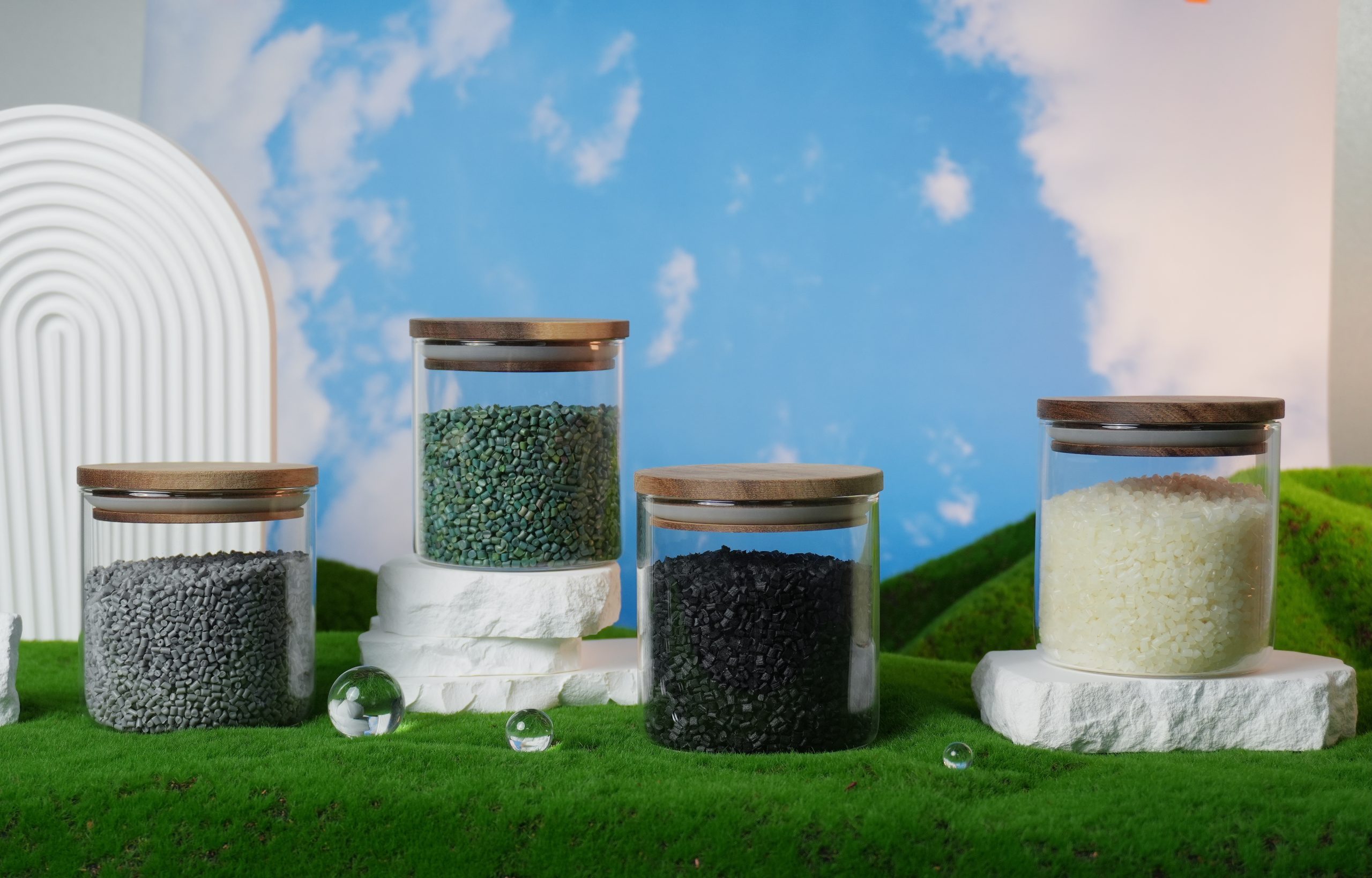
Glass-fiber-reinforced nylon is a composite material made by combining a nylon resin—commonly PA6 or PA66—with short glass fibers. During compounding, the fibers are dispersed throughout the polymer. The material is then supplied as pellets for injection molding or other processing methods.
Common reinforcement levels include 15%, 20%, 30%, 35%, 40%, and 50% glass fiber by weight. A higher fiber content generally increases stiffness and strength, but it can also affect flow, surface appearance, toughness, tool wear, and processing requirements. The highest percentage is therefore not automatically the best choice.
How Glass Fibers Strengthen Nylon
The nylon matrix binds the material together, protects the fibers, transfers loads, and forms the finished shape. The glass fibers act as a rigid reinforcement. When the component is loaded, stress moves from the softer polymer matrix into the stronger and stiffer fibers.
This load-sharing mechanism allows reinforced nylon to resist stretching and bending more effectively than unfilled resin. Performance depends on several factors:
- Fiber content and length;
- Fiber orientation inside the molded part;
- Adhesion between the fiber and nylon matrix;
- Nylon grade and additive package;
- Moisture condition and operating temperature;
- Part geometry, gate position, and weld lines;
- Molding temperature, pressure, and shear history.
A well-designed 30% glass-filled nylon component can offer a very different performance profile from unfilled nylon, even though both use the same base polymer family.
1. Higher Tensile Strength
One of the most important benefits of glass fiber is a significant increase in tensile strength. Unfilled nylon can stretch more readily under load. Glass fibers limit this movement and help the component support greater forces before permanent deformation or failure occurs.
Higher tensile strength is useful for brackets, housings, handles, supports, structural covers, and other parts that must carry mechanical loads. It can also make it possible to reduce wall thickness or consolidate several components into one molded part, provided the new design is validated properly.
2. Greater Stiffness
Glass reinforcement produces a major increase in flexural modulus, which describes a material’s resistance to bending. A stiffer component maintains its shape more effectively and can provide a more precise, solid feel during use.
This property is especially valuable in:
- Load-bearing housings;
- Electrical frames and supports;
- Automotive brackets;
- Power-tool bodies;
- Mechanical levers;
- Pump and fan components;
- Precision industrial assemblies.
Stiffness should be balanced with impact requirements. Increasing glass content can reduce flexibility and may make poorly designed corners or weld lines more sensitive to cracking. Rounded transitions, suitable wall thickness, and appropriate grade selection remain essential.
3. Improved Heat Resistance
As temperature rises, unfilled nylon gradually loses stiffness. Glass fibers help the composite retain its shape and mechanical performance at elevated temperatures. Reinforced grades therefore offer better heat-deflection behavior and lower deformation under combined heat and load.
This improvement makes glass-filled nylon suitable for engine-area components, electrical devices, appliance parts, and machinery exposed to warm operating conditions. Heat-stabilized formulations can provide additional protection against long-term thermal aging.
Glass fiber does not change the base polymer into a limitless high-temperature material. Continuous-use capability still depends on the nylon type, load, exposure time, moisture, chemical environment, and specific formulation.
4. Better Dimensional Stability
Nylon absorbs moisture, which can change its dimensions and mechanical properties. Glass reinforcement reduces overall polymer movement and helps control shrinkage, swelling, and creep. This gives reinforced nylon better dimensional stability than an equivalent unfilled grade.
More stable dimensions are beneficial for parts with assembly tolerances, bearing locations, screw bosses, alignment features, or sealing interfaces. However, glass-filled nylon remains moisture-sensitive. Designers should use conditioned material data and account for the real humidity of the application.
5. Reduced Creep Under Long-Term Load
Creep is the gradual deformation of a material under a constant load. It can occur even when the applied stress is below the material’s short-term strength. Glass fibers help the nylon resist molecular movement, greatly improving its ability to retain shape under sustained loads.
Reduced creep is essential for bolted assemblies, clips under continuous tension, structural supports, gear housings, and parts that must preserve clamping force. Temperature and moisture accelerate creep, so long-term design data should be considered rather than relying only on room-temperature tensile strength.
6. Lower Mold Shrinkage
Glass fibers restrict polymer contraction as a molded component cools. Reinforced nylon therefore usually has lower overall molding shrinkage than unfilled nylon. This can improve dimensional control and reduce certain types of deformation.
Fiber orientation also makes shrinkage directional. The material may shrink differently along and across the direction of flow, creating warpage if the part or mold is not designed carefully. Balanced gating, consistent wall thickness, appropriate cooling, and simulation can help manage this behavior.
7. Improved Wear and Fatigue Performance
Reinforcement can improve resistance to deformation and surface damage in components exposed to repeated loading. Depending on the formulation, glass-filled nylon can perform well in gears, guides, levers, and mechanical housings.
Glass fiber alone does not guarantee low friction. For sliding parts, manufacturers may use lubricated or wear-modified compounds containing PTFE, silicone, aramid fiber, or other additives. The counterface material, surface pressure, speed, temperature, and lubrication conditions must also be evaluated.
PA6 GF vs PA66 GF
Both PA6 and PA66 can be reinforced with glass fiber, but they serve somewhat different needs.
| Selection factor | Glass-filled PA6 | Glass-filled PA66 |
|---|---|---|
| Processing | Generally easier flow | Higher processing temperature |
| Surface appearance | Often easier to optimize | Can be more fiber-visible at high loading |
| Toughness | Frequently offers a useful balance | Often more rigid |
| Heat resistance | Good | Generally higher |
| Dimensional stability | Improved over unfilled PA6 | Often better for demanding conditions |
| Cost | Usually lower | Usually higher |
The correct choice should be based on an exact grade comparison rather than the polymer name alone. Heat stabilization, impact modification, hydrolysis resistance, flame retardancy, and fiber percentage can change the result significantly.
Design and Processing Considerations
Glass-filled nylon requires careful engineering. Important considerations include:
Fiber orientation
Fibers tend to align with melt flow during injection molding. Strength and shrinkage are therefore directional. Gate location should guide fibers along important load paths whenever possible.
Weld lines
Where two flow fronts meet, fibers may not cross the joint effectively. Weld lines can become weak points, particularly around holes or complex features. Gate design, venting, melt temperature, and part geometry should be optimized accordingly.
Surface finish
High glass content may produce visible fibers or a less glossy surface. Mold temperature, surface texture, fiber length, resin flow, and grade selection all influence appearance.
Tool wear
Glass fibers are abrasive. Screws, barrels, nozzles, gates, and molds may require wear-resistant materials or coatings for long production runs.
Moisture control
Nylon pellets must be dried correctly before processing. Excess moisture can cause hydrolytic degradation, reducing strength and creating surface defects.
How to Select the Right Glass-Filled Nylon
Before specifying a material, manufacturers should define:
- The required stiffness and strength;
- Continuous and peak operating temperatures;
- Static, dynamic, and impact loads;
- Exposure to humidity, water, coolant, oil, or chemicals;
- Dimensional tolerances and acceptable warpage;
- Surface appearance requirements;
- Flame-retardant or electrical requirements;
- Expected production volume and mold durability;
- The need for impact, heat, hydrolysis, or wear modification;
- Validation requirements for the finished component.
Conclusion
Glass fiber reinforcement improves nylon by increasing strength, stiffness, heat resistance, dimensional stability, and resistance to long-term deformation. These advantages allow reinforced PA6 and PA66 compounds to perform in structural applications that would be unsuitable for unfilled nylon.
Successful use, however, depends on more than choosing a fiber percentage. Fiber orientation, weld-line placement, moisture control, part geometry, processing conditions, and the exact compound formulation all influence final performance. By matching the material and molding design to the real application, manufacturers can produce lightweight, durable components with an excellent balance of performance and cost.